
Clermont VINELink Release Coverage
Ohio uses VINE and VINELink for participating state and local custody data. The Clermont County Sheriff expressly sends the question “Can I find out when an inmate is released?” to VINE. The sheriff lists 800-770-0192, and the Ohio VINELink portal provides the online path. That makes VINE Clermont’s official alert layer even though the sheriff publishes no 24-hour or 72-hour release feed.
Coverage depends on the reporting agency. A record may show current custody or a recent released status with a status date. It is not a complete history of all Clermont County Jail departures. Older results may age out. Data errors must be corrected by the jail or other agency that supplied the record.
System boundaries matter. VINE can carry participating local jail and state corrections information. It is not the Bureau of Prisons historical locator and should not be used to interpret a federal release. A sheriff record confirms the exact local booking departure; a court docket explains the legal order.
Note: A person missing from VINELink may reflect spelling, data age, transfer, or agency coverage rather than a proven release.
Search a Clermont Inmate on VINELink
Search one person at a time. Full names reduce false matches, while VINELink also permits a partial last name with at least its first two characters. A candidate card is only a lead. Compare identifiers and the reporting agency before relying on the status.
- Open VINELink and choose Ohio as the state.
- Enter the full first and last name when known. If no result appears, retry a spelling variant or a permitted partial name.
- Review all candidate records. Compare the reporting agency and available identifiers rather than choosing the first similar name.
- Open the correct record and read Custody Status, status date, and the agency that supplied the update.
- If the record says released or transferred, confirm it with Clermont County Jail and the correct court docket.
- If nothing appears, contact the facility. Report only that no online result was found.
The Clermont County released-inmate search path adds the current jail roster, Municipal or Common Pleas case record, and a sheriff release-record request when exact release time or reason matters.
The official VINELink application shows how a specific person’s status and notification choices appear in one workflow.
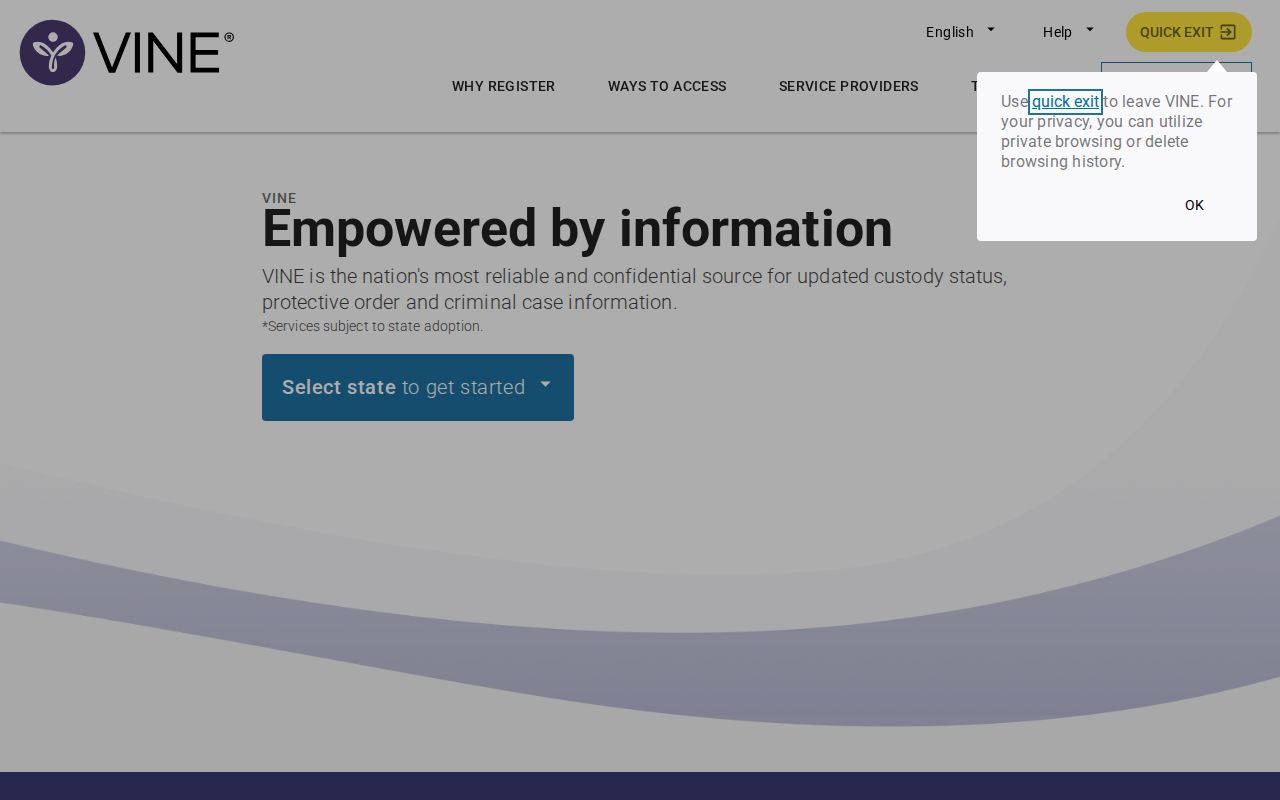
Those screens support timely checking, but the originating agency remains the source for corrections.
Clermont VINELink Release Fields
Read each field in context. Custody status describes what the reporting agency most recently supplied. The status date marks that update, not always the physical gate time. Agency information identifies who can correct an error or provide a durable record.
| Field | What it establishes |
|---|---|
| Name and identifiers | Help distinguish candidate records; match all available details. |
| Reporting agency | Identifies the jail or corrections source responsible for the data. |
| Custody Status | Shows the supplied current or recent custody state. |
| Status date | Dates the status change or report, subject to agency timing. |
| Notification options | Shows which phone, text, email, or in-app methods are offered for that record. |
A released result does not show why the person left. Bond, time served, dismissal, court order, or transfer can produce different legal records. The jail release record can include an actual release timestamp, disposition code, and receiving authority when maintained. The docket may show a bond or sentence order while the case stays open.
Transfer is one of the most important outcomes to verify. A person can leave Clermont County Jail and enter ODRC, another county, federal custody, or another holder’s control. That is a real departure, but not release to the community. Ask for the receiving authority when maintained, then check that agency. VINE may report a custody change before the next database is ready.
Set Clermont County Release Alerts
Registration begins inside the correct person record. Available methods vary by agency and change type. VINE recommends using at least two methods when practical. Keep the PIN because it may be needed to acknowledge calls or change notifications.
- Open the verified person record and select notifications.
- Choose from the phone, text, email, or in-app methods shown for that record.
- Enter the delivery address or number carefully.
- Create a four-digit PIN when prompted. A phone or TTY call may require the PIN followed by the pound sign to stop repeat calls.
- Complete any account step using the six-character code sent by email or text.
- Retain the PIN and confirmation details. For help, contact VINELink support at 1-866-277-7477.
An alert can arrive while a court case remains open. That is common after bond release and some supervised outcomes. Record the custody status and date, then read the latest court entry. The alert should not be translated into a dismissal or the end of all supervision.
Phone alerts may repeat until acknowledged with the chosen PIN and pound sign. Text notices may also request the four-digit PIN. Account setup can use a separate six-character confirmation code sent by text or email. Saving both the registration details and correct person record reduces the chance of acting on the wrong alert.
Notification options can differ by record. Using more than one method helps when a phone is unavailable or an email is delayed. It does not make the data more accurate. The reporting jail must correct a bad status, name, or date.
Confirm Clermont VINELink Release Results
A strong confirmation uses the source that owns each fact. VINE supplies a recent custody indicator. Clermont County Jail can confirm an operational change, while a sheriff booking-release record supplies durable local details. Municipal or Common Pleas dockets show the bond, dismissal, sentence, community control, or transfer authority.
For a person who entered Ohio prison, use the ODRC Offender Search. Read Current Status before Expected Release Date/Parole Eligibility Date. Incarcerated means state custody continues. APA Supervision or Judicial Release/Released can support prison exit when paired with release and supervision detail.
A lawful redaction can leave useful facts intact. Ohio public-records law permits exemptions, and corrections records have added limits. The release date or type may still be produced while protected details are withheld. Keep the agency’s stated authority and do not describe a partial response as concealment.
Federal custody requires the BOP locator. A BOP result marked Released or Not in BOP Custody confirms only departure from BOP custody and may coexist with another system or federal supervision. ICE has a separate current locator. VINE cannot merge these episodes.
Note: When sources disagree, contact the reporting agency and request the release record instead of choosing the preferred result.
Why Clermont Sheriff Uses VINE
Clermont’s information setup splits timely notice from documentary proof. The sheriff maintains a current roster that refreshes at the top of each hour, but it has no recent-release tab, release date, reason, or destination. For release notification, the sheriff’s corrections FAQ directs the public to VINE. For exact records, the sheriff offers public-record request channels.
The Clermont Sheriff corrections FAQ is the local source for that route.
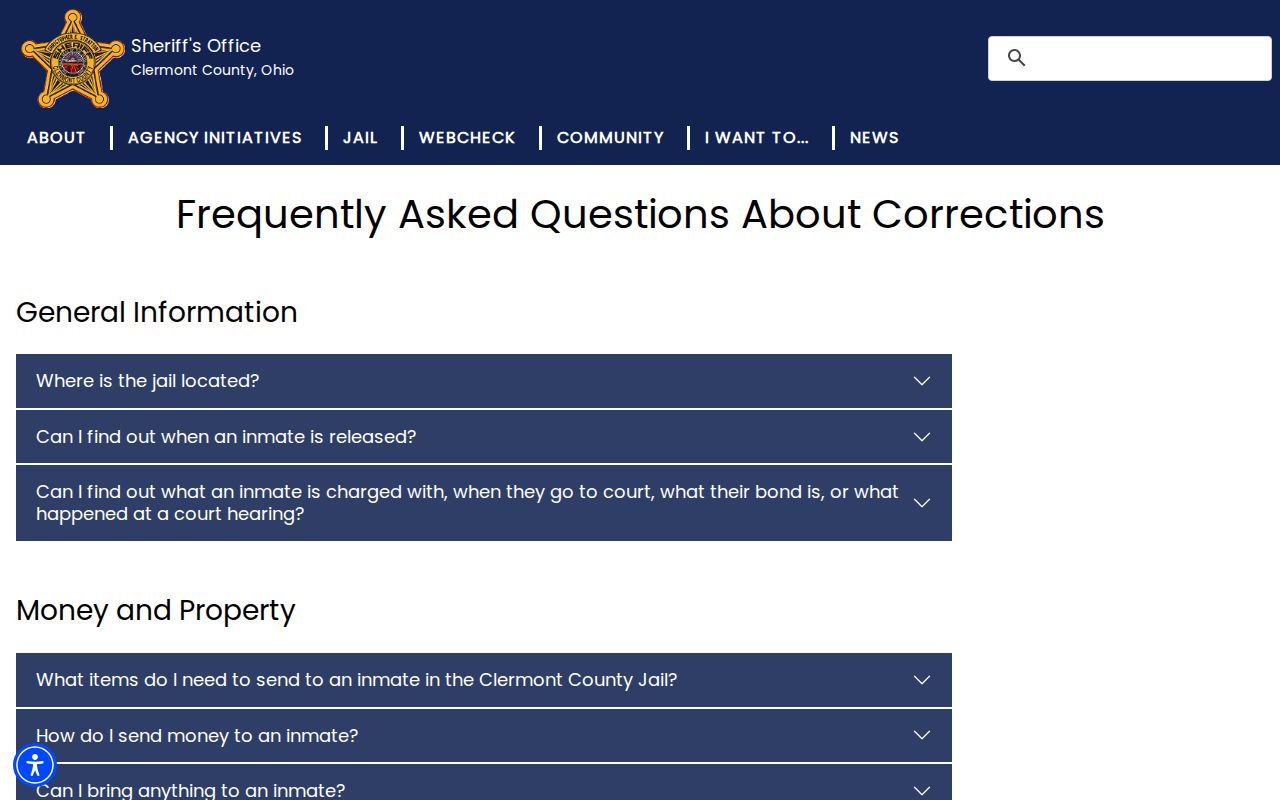
This official division of labor explains why VINE is useful without treating it as the county’s permanent release ledger.
If exact time, release code, or receiving agency matters, request the existing booking and release record by full name, booking number if known, and a narrow date range. Ask for fields that already exist. Do not ask staff to create a narrative or determine present whereabouts.
The sheriff accepts requests through NextRequest, by phone, email, and in person. A narrow request can ask for admission and release times, release or disposition code, releasing authority, receiving agency, and holds shown at release. Not every field is guaranteed to exist or be public. Ohio law permits exemptions and redactions, so a partial record can still be the best available proof.
The court record answers another part of the question. Municipal Court generally handles misdemeanor matters, while Common Pleas handles adult felonies. A bond order or dismissal can explain legal authority, yet it may not show the instant when jail staff completed processing. Keep the VINE status, jail record, and court event as separate facts with their own dates.
Clermont Release Tool Boundaries
Ohio eSORN is separate from VINELink. It applies only when a person has a registration duty under state law. A missing eSORN record proves nothing about a jail stay or release. Likewise, a current Clermont jail roster entry shows present listing, while later absence starts a check rather than proving community release.
A state transfer is another key distinction. If a name disappears from the county roster and an ODRC record says Incarcerated, the person moved from county to state custody. That is not release to the community. Only later ODRC status and actual release or supervision details can support a state-prison release.
Ohio’s public eSORN portal can be relevant only to a person with a statutory registration duty. It is not a fallback for every missing VINELink result. The BOP locator is the proper federal route, and the ICE locator serves current immigration custody. Searching the wrong system can produce an empty result even when another agency holds the person.
Juvenile detention is also outside the adult search path. Clermont County Juvenile Detention Center records carry different access limits, and an adult VINELink workflow should not be used to promise public juvenile release details. Authorized case-specific questions belong with Juvenile Court.
Use the smallest valid claim: “VINELink reports released as of the status date,” “ODRC reports APA Supervision,” or “no online result was found.” Each phrase preserves what the source can truly establish.
Public Record Search
Sponsored Results